Tree Pruning in Merton
Healthy, well-shaped trees can transform a property, but they also need regular care to stay safe, balanced, and attractive. If you are looking for tree pruning in Merton, you may already know that local conditions can be demanding: narrow front gardens, mature roadside trees, shared boundaries, terraced homes with limited access, and busy commercial sites all create different pruning challenges. The right service helps manage growth without harming the tree, while also improving light, reducing risk, and keeping your outdoor space looking its best.
In Merton, tree pruning is often about more than appearance. It can improve clearance over pavements, protect roofs and fences, reduce shading in gardens, and keep trees in better condition through the changing seasons. Whether you manage a family home near Wimbledon, a rental property in Morden, a shopfront in Wimbledon Chase, or a business yard close to Colliers Wood, a careful pruning plan can make a noticeable difference.
Our local tree pruning service is designed around real customer needs: sensible advice, tidy work, practical scheduling, and the right approach for each tree. From formative pruning on younger trees to crown reduction, thinning, deadwood removal, and corrective pruning on older specimens, the aim is to help your trees thrive while keeping your property safe and usable.
Why tree pruning matters for Merton properties

Merton contains a wide range of property types, from period homes with established gardens to newer developments with tighter landscaping and limited planting space. Because trees often grow close to houses, garages, boundary lines, and roads, pruning becomes an essential part of maintaining both the tree and the property around it. A well-planned pruning service can stop branches from encroaching on gutters, windows, sheds, and overhead lines, while also reducing the risk of overextended limbs failing in wind or heavy rain.
Local conditions also matter. Tree canopies in built-up areas may compete for light, especially where neighbouring trees and tall buildings create shade. In those situations, selective pruning can help bring more daylight into gardens and living spaces without removing the tree entirely. For households that want privacy as well as a manageable garden, pruning can be used to balance screening with healthy growth.
Tree pruning in Merton is also valuable for long-term tree health. Removing dead, damaged, rubbing, or poorly positioned branches helps trees direct energy where it is needed most. When done properly, pruning supports structural strength, encourages better branching habits, and reduces future maintenance problems. It is not just about cutting back growth; it is about making considered choices that suit the species, the site, and your priorities.
What our tree pruning service can include

Every tree and every property is different, so pruning should never be treated as a one-size-fits-all task. The exact approach depends on the tree species, age, condition, size, and location, as well as your goals for the space. Some customers want to improve safety around a driveway or footpath, while others need better light in the garden or a cleaner appearance for the front of the property.
Typical tree pruning work may include:
- Crown thinning to reduce density and allow more light and air through the canopy
- Crown lifting to raise lower branches for access, clearance, or visibility
- Crown reduction to reduce overall spread or height in a controlled way
- Deadwood removal to take out broken, dying, or unsafe branches
- Formative pruning for younger trees to improve structure and future shape
- Corrective pruning to address poor previous cuts or awkward growth
- Visibility pruning for driveways, paths, shops, and entrance areas
In some cases, pruning may be part of a wider tree care plan that includes inspection, bracing advice, hedge management, or tree removal if the tree is already beyond recovery. A responsible local team will explain what is suitable and what is not, rather than recommending unnecessary cutting.
Good pruning is selective, measured, and respectful of the tree’s natural form. That is especially important in a borough like Merton, where gardens can be compact and each tree often has to do several jobs at once: screen, shade, shelter, and soften the view.
When pruning is the right choice

Homeowners and business owners often ask when a tree should be pruned rather than removed or simply left alone. The answer depends on what the tree is doing, how it is growing, and what is happening around it. In many cases, pruning is the most practical way to solve a problem while keeping a healthy tree in place.
Pruning may be suitable if a tree is:
- Blocking too much light into a garden, patio, or room
- Growing too close to a roof, wall, fence, or extension
- Dropping deadwood or broken branches
- Creating a hazard near parking areas, paths, or entrances
- Encroaching on neighbouring boundaries
- Looking unbalanced after storm damage or previous poor cuts
- Too dense for the space it occupies
- Young and in need of shaping for the future
In Merton, many properties sit on streets where parking is tight and access is limited. That can make pruning more important because branches may affect driveways, visibility, or pedestrian movement. For commercial properties, pruning can also help keep entrances clear and present a neat, professional appearance for staff and visitors.
There are also times when pruning is recommended for the tree’s own wellbeing. A tree with crossing branches, rubbing limbs, or weight held too far out from the trunk can become stressed over time. Thoughtful pruning helps reduce that strain and can extend the useful life of the tree.
Tree pruning for homes, landlords, and businesses in Merton
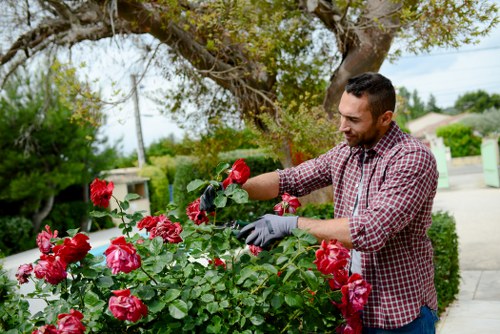
Our tree pruning services are useful for a wide range of local customers. Private homeowners often need help with front garden trees, rear boundary trees, or mature specimens that have outgrown the available space. Landlords may need pruning carried out between tenancies or as part of ongoing property maintenance. Businesses often require cleaner, safer outdoor areas that support access, visibility, and day-to-day operations.
Residential customers in areas such as Wimbledon, Morden, South Wimbledon, Colliers Wood, Raynes Park, and Wimbledon Chase may want help with trees that shade lawns, overhang paths, or interfere with neighbouring gardens. In older streets, trees may have been planted many years ago and are now much larger than expected. In newer developments, trees may have been planted too close together or too near buildings, creating a need for careful correction.
Commercial sites can face different priorities. Retail forecourts, office entrances, schools, care facilities, hospitality venues, and managed estates may all need regular pruning to maintain safe and tidy surroundings. A local team understands the need to work efficiently, keep disruption low, and respect parking, access, and working hours.
Why a local team helps:
- Better understanding of common tree species and site conditions in the area
- Awareness of access issues, permit needs, and restricted parking
- Practical scheduling that suits nearby homes and businesses
- Experience with tight boundaries, shared gardens, and front-of-house presentation
- Faster response for urgent pruning concerns after wind damage or sudden branch failure
How the pruning process usually works

Customers often want to know what happens on the day and how much disruption to expect. A professional pruning job should be straightforward, organised, and focused on safety from start to finish. While each site is different, the general process is usually similar.
Step 1: Initial assessment
The tree is inspected to understand its shape, condition, and any obvious issues. This helps identify deadwood, weak branch unions, overcrowded areas, and the best pruning method for the result you want.
Step 2: Agreeing the approach
You should be told what the pruning will achieve, what can realistically be done, and whether any permissions, protected-tree considerations, or neighbour discussions may be relevant. In some cases, a lighter touch is better than a heavy reduction.
Step 3: Safe working setup
The team prepares the area, uses the right equipment, and plans the work to protect people, vehicles, fences, and nearby planting. In tighter parts of Merton, this may involve careful positioning and a tidy set-up to minimise disruption.
Step 4: Pruning the tree
Branches are removed or reduced with an eye for balance, structure, and tree health. Good pruning avoids unnecessary damage and keeps cuts appropriate to the species and branch size.
Step 5: Tidying and clearance
Cuttings are usually gathered and removed as agreed, leaving the site neat and easy to use again. Many customers value this part just as much as the pruning itself, especially when access is already limited.
Step 6: Aftercare advice
You may be advised on watering, monitoring, or the best timing for future pruning, especially if the tree is young, recently stressed, or located in a challenging spot.
Tree species and pruning needs in the local area
Merton’s tree stock can include a mix of ornamental, native, and mature specimen trees. Different species need different approaches, and a careful pruning plan should respect those differences. Some trees tolerate selective pruning well, while others prefer lighter intervention. The aim is always to improve the tree’s condition without forcing an unnatural shape.
In gardens and public-facing spaces, common pruning needs may arise with maples, cherries, limes, hornbeams, apples, plums, sycamores, conifers, and evergreen screening trees. Fruit trees need regular shaping to stay productive and manageable. Ornamental trees may need crown balancing to keep them attractive in compact spaces. Larger mature trees may require deadwood removal and targeted reductions where branches extend too far over a roof or boundary.
What pruning can improve
Well-executed pruning can improve more than the look of a tree. It can increase light levels, reduce storm damage risk, encourage stronger growth, and make maintenance easier over time. In family gardens, that might mean more usable lawn space and better room for children’s play. In commercial settings, it may mean a cleaner entrance, safer walkways, and a more orderly outdoor environment.
For older gardens
Many older Merton properties have mature trees that were planted before the current layout of driveways, extensions, or garden structures existed. In these cases, pruning helps the tree adapt to present-day use. A measured crown reduction or selective thinning can often be enough to restore balance without losing the character that makes the tree valuable.
For newer homes
Newer developments often have smaller garden footprints, so even moderate tree growth can feel overwhelming. Pruning in these settings is often about preserving usable space, maintaining privacy, and preventing branches from crowding the property. A sensible maintenance schedule can save time and avoid bigger problems later.
Pruning should always be planned around the long-term shape of the tree, not just the immediate problem.
Practical benefits for customers in Merton
There are many reasons customers decide to book tree pruning in Merton, but the benefits tend to fall into a few clear categories. Some are visual, some are safety-related, and some simply make the property easier to live or work in.
- More natural light in rooms, gardens, and outdoor seating areas
- Better safety by reducing weak, damaged, or overextended branches
- Improved access for paths, driveways, doors, and service areas
- Healthier trees with better branch structure and airflow
- Cleaner presentation for homes, shops, offices, and managed premises
- Less conflict with boundaries where trees are growing near neighbouring land
For many local customers, the biggest benefit is peace of mind. Once the tree has been assessed and pruned properly, you do not have to keep worrying about the same overhanging branch, the same low limb over the driveway, or the same shaded corner of the garden. That makes everyday use of the property easier and more enjoyable.
It is also worth noting that pruning can support seasonal preparation. Ahead of windy weather or periods of heavy growth, a tidy, well-structured canopy may perform better than a neglected one. This is especially useful where trees are close to public footpaths, neighbouring roofs, or parking spaces.
Preparation checklist before your tree pruning appointment
A little preparation helps the work go smoothly and keeps the visit efficient. You do not usually need to do much, but a few small steps can make access easier and reduce delays on the day.
- Move cars from driveways or nearby parking spaces if requested
- Clear access gates where possible
- Remove fragile items from under the tree, such as garden ornaments or furniture
- Let nearby occupants know if shared access is involved
- Point out any known issues such as weak fencing, buried services, or awkward entry points
- Check whether you want all cuttings removed or whether any material may be retained for your own use, where appropriate
If the tree is close to a neighbour’s boundary, it can also help to discuss the planned work in advance. That is not always necessary, but it can avoid confusion when branches overhang shared spaces or when access has to pass through side gates or narrow alleys.
For larger properties or commercial sites, it can be helpful to identify a contact person on the day who can confirm the agreed scope of work. That keeps the pruning process moving and reduces the chance of misunderstandings.
Pricing factors: what affects the cost of pruning?
People often want to understand what influences the price of a pruning job. While exact prices depend on the site and the tree, several common factors usually shape the quote.
These include:
- Tree size and height — larger trees need more time, skill, and equipment
- Access — narrow side passages, rear gardens, or restricted parking can increase labour
- Type of pruning — light deadwood removal is different from crown reduction or corrective work
- Location — working near buildings, roads, or overhead obstacles may require extra care
- Disposal needs — removing all branches and debris adds to the service scope
- Condition of the tree — storm damage, decay, or awkward growth patterns can make the work more involved
When you request a quote, the most helpful thing is to describe the tree clearly and mention anything that might affect access. Photos can also be useful if a site visit is not immediately possible. A sensible quote should reflect the actual work required rather than a generic estimate with hidden assumptions.
For customers in Merton, access often plays a significant role. Terraced streets, shared rear lanes, compact gardens, and busy roadside areas can all affect how the job is planned. A local tree team will understand these constraints and factor them into the work properly.
Why choose a local company for tree pruning in Merton?
Choosing a local service has real advantages. A team that regularly works in Merton is more likely to understand the mix of property styles, road layouts, and garden sizes common across the borough. That practical familiarity can make everything run more smoothly from the first enquiry to the finished job.
Local knowledge matters when dealing with access on residential streets, coordinating around parked cars, and carrying equipment safely through narrow entrances. It also helps when working near schools, small businesses, or multi-occupancy buildings where timing and discretion are important. A local company is more likely to understand how to complete the work efficiently without causing unnecessary disruption.
There is also value in continuity. If your trees need periodic maintenance, having a local team means the same practical understanding can be applied year after year. That makes it easier to plan future pruning intervals, identify changes in growth, and keep the trees in a manageable condition.
Customers often choose local tree care because it combines responsiveness, practical planning, and a better understanding of the area.
Areas covered
Tree pruning services are available across Merton and nearby neighbourhoods, including residential streets, mixed-use areas, and commercial premises. Common areas covered include:
- Wimbledon
- South Wimbledon
- Wimbledon Chase
- Morden
- Colliers Wood
- Raynes Park
- Motspur Park
- Lower Morden
- Pollards Hill
- St Helier and surrounding parts of the borough
If you are unsure whether your property falls within the service area, the easiest approach is to enquire and explain the location and type of tree work needed. Trees near borough boundaries or close to shared access routes may still be suitable for scheduling, depending on the job.
We work with homeowners, landlords, letting agents, business owners, estate managers, and other local property customers who need reliable pruning support. Whether the job is a single front-garden tree or a larger site with multiple trees, a local team can help plan it sensibly.
Frequently asked questions
How often should trees be pruned?
It depends on the tree species, age, and location. Some trees benefit from annual checks and occasional light pruning, while others may only need work every few years. Young trees often need more regular formative pruning than mature trees.
Is pruning always better than removal?
No. Pruning is useful when the tree is healthy enough to retain and can be safely reshaped or reduced. If a tree is badly decayed, structurally unsafe, or in severe decline, removal may be the more suitable option. A proper assessment should always come first.
Can pruning help with a tree touching my house?
Yes, in many cases. Branches near walls, roofs, windows, or gutters can often be cut back carefully to restore clearance. The exact method depends on the tree and how much growth can reasonably be removed without harming it.
Will pruning stop my tree from getting too big?
Pruning can help manage size, but it does not stop growth entirely. Regular maintenance is usually needed if a tree is in a confined space or close to a structure. Long-term planning is important, especially in smaller gardens.
Do I need to do anything before the team arrives?
Usually only basic preparation such as clearing access and moving vehicles where possible. If the tree is near neighbours, shared gates, or tight parking, it helps to flag that in advance.
Can pruning be done on trees in front gardens or roadside areas?
Yes, although these sites may need more careful planning because of pedestrians, parked vehicles, and restricted working space. A local team will assess access and choose a method that suits the location.
How do I know what kind of pruning my tree needs?
A site assessment is the best starting point. The right solution might be deadwood removal, thinning, lifting, reduction, or a combination of these. The aim is to match the work to the tree and the problem you want solved.
Book tree pruning in Merton
If your tree is becoming difficult to manage, blocking light, or creating access problems, now is a good time to arrange an assessment. Professional pruning can make a substantial difference to safety, appearance, and day-to-day use of your property. It is often a practical, cost-effective way to keep a valuable tree while solving the issues it has started to create.
Whether you need a single tree trimmed back, several trees shaped as part of routine maintenance, or a larger site tidied before the next season, a local service can help you plan the work properly. The best results come from careful pruning, a clear understanding of the tree’s needs, and a tidy finish that respects your property and neighbours.
Contact us today to request a free quote, discuss your tree, and arrange a suitable time for pruning in Merton. If you are ready to improve light, restore balance, or make your outdoor space easier to use, book your service now and take the next step toward safer, healthier trees.